What the inspection needs to establish
The technician adapts the inspection to the installation and reported behavior. These are areas to evaluate, not a list of parts to replace.
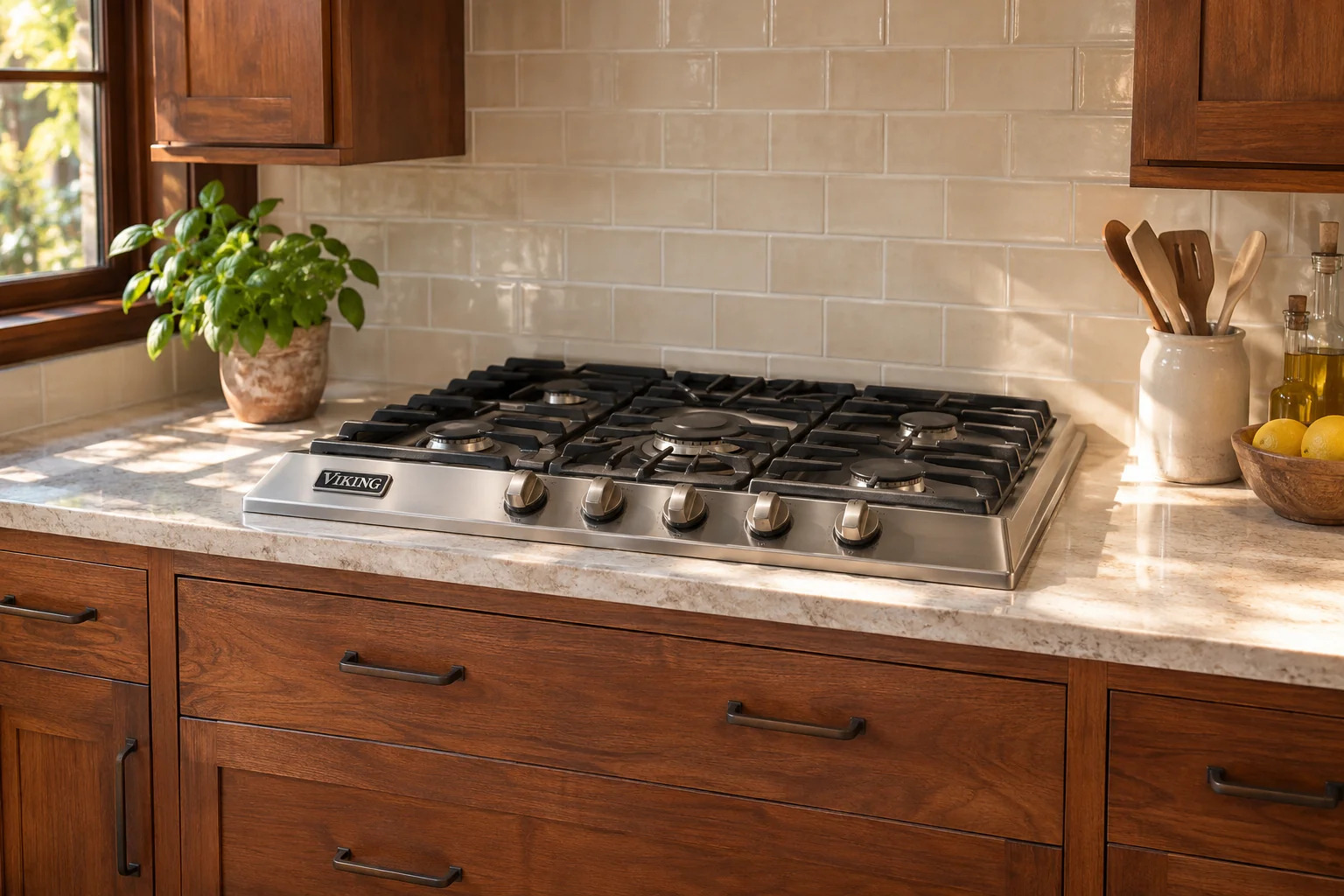
- Identify gas, radiant electric or induction operation.
- Compare the affected burner or zone with the remaining positions.
- Evaluate the applicable ignition, heating and control systems.
- Review connections and access using the appropriate safety procedures.
Find the affected function
Which zone is affected matters. A single position, a shared pair and a complete loss of response suggest different diagnostic starting points without proving which part has failed.
Viking service requests can involve cooling, cooking, ice making or dishwashing. Identifying the appliance and its affected function keeps the discussion focused before a diagnosis is made.
What you may be noticing
Identify the exact function rather than treating the appliance as one system. Separate compartments, cooking modes, zones and cycle stages can behave differently and give the inspection a more useful starting point.
- Repeated ignition clicking.
- A control zone that does not respond.
- Heat that changes unexpectedly.
- A message that appears during ordinary use.
- One cooking zone failing to heat.
Diagnosis, approval and repair
The diagnostic/service call is $149, credited toward an approved repair. After diagnosis, you receive an itemized repair quote before work begins. Genuine OEM parts are used.
Availability, including same-day or emergency requests, depends on the address and schedule. Sending a request does not reserve an appointment.
The 1-Year Parts & Labor Warranty covers parts installed and labor performed under normal use. It excludes new unrelated faults, misuse, power surges and work performed by others after the visit.
Sealed-system and refrigerant work is performed by an EPA-certified technician. Manufacturer names identify equipment serviced; this is independent service.
Before the visit
Stop using a zone that behaves unsafely and let the surface cool. Do not lift the cooktop, bypass controls or open gas or electrical compartments. For a gas odor, leave the area and contact the utility or emergency services from a safe location.
Clear a safe working area, keep any displayed message and mention custom panels or restricted access. Do not dismantle the appliance in preparation.